Wait for the Lord

Andrew Guffey • March 20, 2026

Exercising patience.

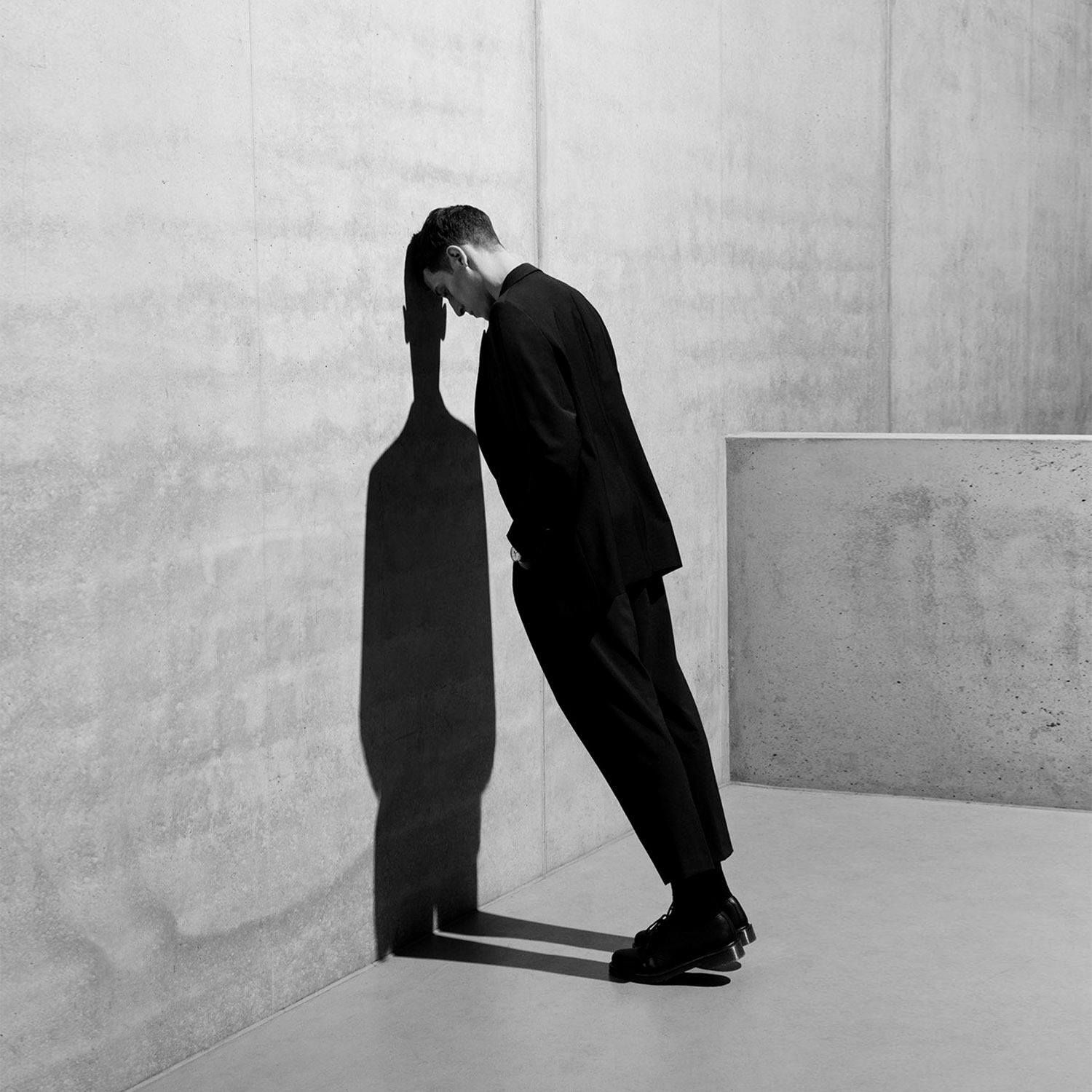
The Psalms are a gift to the church and to the life of prayer. It is true that there's plenty of desire for retribution voiced in the Psalms, so one should not pray or read them unreflectively. But there are among the psalms some that magisterially give voice to the cry of our hearts. The Psalm for this week is one such psalm: De profundis clamo ad te Domine, Out of the depths I cry to you, O Lord. I do not think I've yet met anyone who has not cried out to God out of the depths. Like the book of Job, this Psalm invites us to pour out our hearts to God directly, honestly.


The Psalm reads:

1 Out of the depths have I called to you, O Lord; Lord, hear my voice; *
let your ears consider well the voice of my supplication.

2 If you, Lord, were to note what is done amiss, *
O Lord, who could stand?

3 For there is forgiveness with you; *
therefore you shall be feared.

4 I wait for the Lord; my soul waits for him; *
in his word is my hope.

5 My soul waits for the Lord, more than watchmen for the morning, *
more than watchmen for the morning.

6 O Israel, wait for the Lord, *
for with the Lord there is mercy;

7 With him there is plenteous redemption, *
and he shall redeem Israel from all their sins.


Notice, though, that the Psalm turns from one of crying out to God, for with God there is forgiveness, to the theme of waiting. "I wait for the Lord, my soul waits for him;" "my soul waits for the Lord, more than watchmen for the morning," and to emphasize the point, the line is repeated, "more than watchmen for the morning." We cast our eyes to the horizon, waiting with the desperation and determination of watchmen whose hope is only to make it to the breaking of the light, in which there is safety, in which there is salvation. And the Psalm ends with an exhortation: "O Israel, wait for the Lord, for with the Lord there is mercy; with him there is plenteous redemption, and he shall redeem Israel from all their sins."


As we pray this Psalm, we place ourselves in the place of Israel--not the modern nation state, but Israel, God's own people, and we hear ourselves tell ourselves to wait for the Lord.


And when we are in the depths, what does it mean to wait? It is tempting to think of waiting as a merely passive thing--just biding time, until something changes, until something happens. But true waiting, true patience is more like endurance.


Charles Mathewes, in his book A Theology of Public Life, invites us to consider what it means to live as followers of Christ "during the world." He spots the phrase in the will of Richard Beauchamp, Earl of Warwick, who established a chapel with his estate, "that there be said every day, during the Worlde...three masses." Mathewes uses the phrase to talk about the world not so much as a place, but as an era, and our place within it not a place, but a duration, a time. But we are already late: "We are, in the most profound way, belated; everything important to our fates--our sin and our salvation--has already occurred, or at least (in the latter case) has been inaugurated, if not fully accomplished. ...We should understand the world as something fundamentally must endure--not an absolute and unquestioned 'given,' but rather a contingent configuration of reality that will one day pass away." "This," he concludes, "is what the phrase 'during the world' is meant to bring to the fore. It suggests a period, episode, or era--a non-permanent condition, but one inescapable, for now--in which we find ourselves, and which we must live through."


If that's right, to live "during the world" is to wait for the Lord, even as we cry out to God out of the depths. In the book we've been discussing on Wednesdays, Hanna Reichel's For Such a Time as This, Reichel urges that in the Psalms "wait for the Lord" "does not mean 'be inactive,'" but rather, "'do not take revenge.'" It is "a reminder to bind ourselves to God's work of justice. 'Wait for God' means to watch out for God's action in history and participate in it. Not inaction or surrender, but a renewed commitment." 


When we find ourselves in despair, in confusion and in the midst of what feels like chaos, we can give in to the discord and get lost in the static, or we can wait for the Lord, turn our eyes, our hearts, our ears not to the loudest voices and the most disturbing, but to the still, small voice, the sound of sheer silence, that echoes in our very souls. We can wait for the Lord, committing ourselves to being God's people, not our own people. We turn in prayer, we turn in contemplation, we turn in song, we turn in acts of mercy and compassion that mirror, however imperfectly, the love, mercy, and compassion of our God.


In the Stephen Schwartz musical, Children of Eden, Cain sings of being lost in the wilderness: And now we're lost in wilderness / Lost,crying in the wilderness / And if anyone's watching it seems they couldn't care less / We're lost wilderness. But by the end of the song, even Cain can look forward in hope: And where we are headed boy, I couldn't guess but / Off we go without a warning / Running as we hit the ground \ Where our future lies a-borning / Where our hearts are outward bound / Till one bright and distant morning / We may stop and look around / And there in the wilderness / Finally we'll be found!


If we find ourselves in the depths, our task is to cry out to God, and to wait for the Lord. When we are in the depths, we recommit ourselves to the one who holds us, during the world, until one bright and distant morning, we may stop and look around, and there in the depths, finally we'll be found!

By Andrew Guffey March 13, 2026
How do we talk about our Jewish neighbors? 
By Peter Trumbore March 9, 2026
We turned our clocks ahead this past weekend, bringing with it the unwelcome loss of an hour's sleep, time we won't get back again until the fall when we'll reset our clocks all over again. I don't know about you, but for me the extra daylight after the dinner hour doesn't compensate for the misery of waking up in pitch blackness as if we were still in the deepest depths of winter. The twice-yearly ritual of resetting our clocks from standard time to daylight savings time and back again is a reminder that time is fleeting, or as the Roman poet and author Virgil put it, Tempus Fugit , literally time flies. Virgil's original version of this now common phrase emphasized the idea that time irretrievably escapes us. When it's gone, it's gone. This is very different than the line uttered by Matthew McConaughey's character Rust Cohle in the first season of HBO's series True Detective: "Tine is a flat circle." If you're like me, you may have wondered where that phrase came from, and what it means. But thanks to the miracle of modern Internet sleuthing , we've got an answer. It's a reference to German philosopher Friedrich Nietzsche's concept of "eternal recurrence," In short, the idea that because time is endless, everything will eventually repeat itself. That includes your own life, which you will relive in exactly the same way, an infinite number of times, for all eternity. This may sound like a nightmare to you, but Nietzsche saw it as a cause for celebration, assuming you made your life into something you'd want to repeat an infinitely. What this is all getting at is the topic we're going to talk about in our conversation this week -- our perception of and relationship with time. And we'll start simply, with daylight savings time, and dig deeper from there. Which do you subscribe to more, Virgil's idea of time as irretrievably escaping, or Rust Cohle's short-hand Nietzsche of time as eternally recurring? If you had one more hour in your day, 25 rather than 24, how would you use that extra time? What if you knew you could have one more day, or week, or month, or year of life than what you were expecting? What would you do with that? Would you live that bonus time any differently than your everyday? Come spend some quality time with us this Tuesday, March 10, and join the conversation. Discussion starts tomorrow evening at 7pm at Irish Tavern in downtown Lake Orion.
By Andrew Guffey March 8, 2026
This Sunday, all are welcome to join us for a morning of worship and fellowship. Whether you are with us in the sanctuary or joining from afar, your presence strengthens our community. Our service is at 9:30 a.m. We warmly welcome those who cannot attend in person to join us via our live stream.
By Andrew Guffey March 6, 2026
What do we do when we don't know what to do?
By Andrew Guffey March 1, 2026
This Sunday, all are welcome to join us for a morning of worship and fellowship. Whether you are with us in the sanctuary or joining from afar, your presence strengthens our community. Our service is at 9:30 a.m. We warmly welcome those who cannot attend in person to join us via our live stream.
By Andrew Guffey February 27, 2026
Reflecting on Seven Years
By Peter Trumbore February 23, 2026
We're building our conversation this week around the above quote, that has widely been attributed to English modernist writer and feminist pioneer Virginia Woolf. Before you ask, yes, we are aware that some of Woolf's views, especially on race and class, would make her persona non grata in certain circles today. But that said, the quote is worth thinking about. In some ways it is reminiscent of a quote from C.S. Lewis that was the focus of one of our conversations some eight years ago. Lewis said: "When I became a man I put away childish things, including the fear of childishness and the desire to be very grown up." What both writers seem to be pointing to is the obvious truth that as we age we grow and change. Including our views, our ideas of how the world works, our preconceived notions of ourselves and others. And sometimes that change will feel like loss. What takes the place of those things we've lost? For Woolf, it's other illusions. This brings us back to Woolf's quote. What do you think she is getting at here? Are there illusions that you've had to lose as you've grown older and (hopefully) wiser? What might those be for you? And what about the other half of the quote? What kind of new illusions have we acquired as we've shed others? Finally, are there "comforting illusions" that you still cling to? And to make it a little provocative, is your faith one of them? Come help us sort it all out tomorrow evening. Join us for the discussion Tuesday, Feb. 24 starting at 7pm at Irish Tavern in downtown Lake Orion.
By Andrew Guffey February 22, 2026
This Sunday, all are welcome to join us for a morning of worship and fellowship. Whether you are with us in the sanctuary or joining from afar, your presence strengthens our community. Our service is at 9:30 a.m. We warmly welcome those who cannot attend in person to join us via our live stream.
By Andrew Guffey February 20, 2026
This is us.
By Andrew Guffey February 15, 2026
This Sunday, all are welcome to join us for a morning of worship and fellowship. Whether you are with us in the sanctuary or joining from afar, your presence strengthens our community. Our service is at 9:30 a.m. We warmly welcome those who cannot attend in person to join us via our live stream.