Ascended into Heaven
The Feast of the Ascension
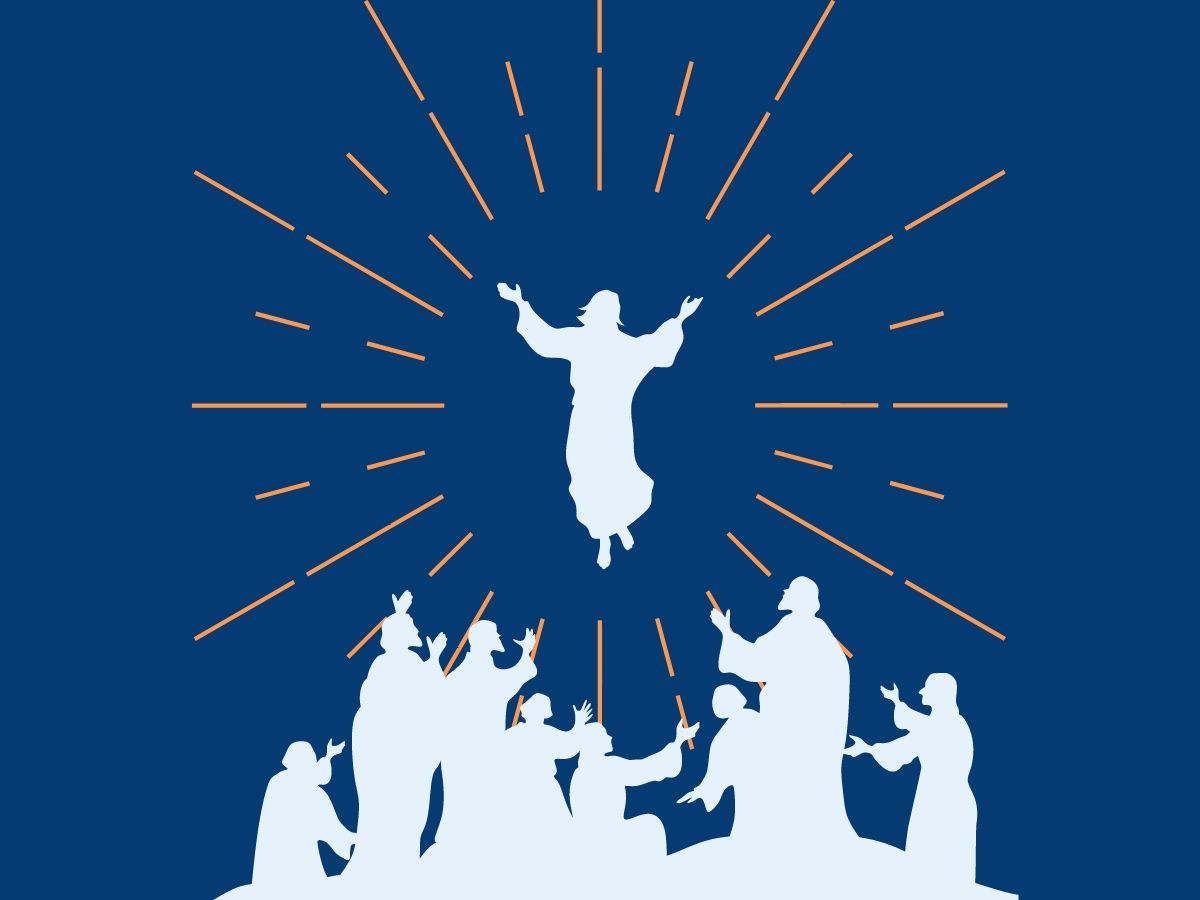
Yesterday was the Feast of the Ascension. Although it is one of our principal feasts, the Feast of the Ascension is less recognized, largely because it comes ten days before Pentecost and because it always falls on the Thursday. Luke is the only author of the New Testament to mention the "ascension" as an event, in both the Gospel according to Luke (24:50-53) and the Acts of the Apostles (1:6-11). In these accounts, Jesus stays with the disciples for forty days after he is raised. Forty days after Easter Sunday falls on a Thursday. In Luke's story, Jesus is crucified, raised on the third day, sticks around for forty days, and then ascends into heaven: "When Jesus had said this, as they were watching, he was lifted up, and a cloud took him out of their sight. While he was going and they were gazing up toward heaven, suddenly two men in white robes stood by them. They said, 'Men of Galilee, why do you stand looking up toward heaven? This Jesus, who has been taken up from you into heaven, will come in the same way as you saw him go into heaven'" (Acts 1:10-11). What should we make of this?
Of course, Luke is not the only New Testament writer to actually know about the Ascension; he's just the only one who narrates it as an event in the (after)life of Jesus. That Jesus was "exalted" to God's right hand was widely affirmed. Psalm 110 begins, "The Lord said to my Lord, 'Sit at my right hand until I make your enemies your footstool.'" The original Psalm probably originated in an environment where God was thought to take the side of the king, but early Christians consistently associated this verse with Jesus's exaltation--that Jesus had been raised to God's "right hand." In other words, Jesus had (re-)entered the divine life. The earliest notice we have of this tradition is Paul (Romans 8:34), but the verse is used also in the Gospels and Acts, Hebrews, 1 Peter, Revelation, and by early Christians after the New Testament (1 Clement, Polycarp, Barnabas, Apocalypse of Peter, etc.) to acknowledge that Jesus was powerfully alive, alive in and with the power of God. And this because or in spite of the fact that he is not with us in the body.
The Resurrection, the Ascension, and Pentecost are one reality, but pondered in different ways. That reality is the living Jesus. Jesus is raised from the dead, destroying death, the first-born of the dead. But Jesus is powerfully alive in God, at God's right hand. And thus, Jesus is and sends life-giving Spirit. In 1 Corinthians 15, when Paul is talking about the resurrection of Jesus he riffs on Genesis: "Thus it is written, 'The first man, Adam, became a living being'; the last Adam became life-giving spirit" (1 Cor. 15:45). So, what if the Resurrection, the Ascension, and Pentecost are not really three separate events, but three ways of looking at the one event of Christ's bursting life?
The poet Malcolm Guite comes close to the mark in his poem "Ascension":
We saw his light break through the cloud of glory
Whilst we were rooted still in time and place
As Earth became a part of Heaven’s story
And Heaven opened to his human face.
We saw him go and yet we were not parted
He took us with him to the heart of things
The heart that broke for all the broken-hearted
Is whole and Heaven-centered now, and sings,
Sings in the strength that rises out of weakness,
Sings through the clouds that veil him from our sight,
Whilst we ourselves become his clouds of witness
And sing the waning darkness into light,
His light in us, and ours in him concealed,
Which all creation waits to see revealed.
"We saw him go and yet we were not parted." The clouds "veil him from our sight," but "we ourselves become his clouds of witness"--"his light in us, and ours in him concealed/Which all creation waits to see revealed." Perhaps we ought rather to say, "his life in us...." Although absent in body, Jesus is nearer to us now, more available, more present, more alive and bringing us to life. Although absent in body, "we were not parted." Because the Ascension is not really about an absence. It is about glory. It is about the glory in which all creation sings. It is about the world "filled with the grandeur of God," as Gerard Manley Hopkins put it.
The Ascension is not a quaint story about the time that Jesus left and went away and we're waiting for him to come back. The Ascension is about how Jesus descended to earth without leaving heaven and is ascending to heaven without having left earth. It is about the pull, the gravity of Christ's hold on all things that pulls all creation back to God. It's as if, having gone to the extremity Christ grabbed hold of the edge of all things and is dragging it back into the Divine dance that it had forgotten.
"He took us with him to the heart of things
The heart that broke for all the broken-hearted
Is whole and Heaven-centered now, and sings...
Whilst we ourselves become his clouds of witness
And sing the waning darkness into light,
His life in us, and ours in him...."