

You are loved, you are honored, you are cherished.
You belong here.
Every Sunday we begin our worship with a prayer, asking that our hearts may be open to all those who cross our threshold and that we may welcome each person in the spirit of God's love. At the heart of our community is this welcoming spirit of love and acceptance for all God's children. Because we know that we have been made welcome by Jesus, that we have been drawn in an embraced by the love of God.
Want to get involved?
What's On?
If you're exploring St. Mary's, or just looking for the latest news, services, and events, you can find them here.
"From ghoulies and ghosties, long-leggedy beasties, and things that go bump in the night, Good Lord deliver us!" This very old folk prayer, which has been tied to both Scotland and Cornwall, used to hang on the wall of my childhood home, and it often comes to mind for me at this time of year. A little trivia -- the first known publication of this prayer was in 1926 in a volume titled "The Cornish and West Country Litany," but it is thought to be far older. That it can be traced to regions of the United Kingdom that are quite distant from one another may be a testament to its antiquity. Anyway, we're right up to the climax of what some call "spooky season," the weeks from the end of summer up until Halloween, which this year falls on Saturday. Apparently this idea of "spooky season" is a relatively recent development, becoming popular on the internet as a way to talk about stretching the adult of fun of Halloween from a single day of dress-up shenanigans to something akin to the more well-established holiday season we're now rocketing toward. This is a far cry from what I recall growing up, where more than a few of the local churches in our area very actively sought to discourage observance of Halloween, labeling it a pagan celebration of witchcraft, devilry, and superstition that was incompatible with being a good Christian. Of course that didn't really dissuade anyone. But with the holiday just a few days away, I thought this would be a good opportunity for us to talk about the nature of spooky stuff, ghoulies and ghosties, and other such things. So tell us, what do you love about Halloween? How do you mark it? Does anything give you pause? What do you think about this claim that you can't be a Christian and still participate in or enjoy Halloween? Finally, what do you make of that old Scots and Cornish prayer? What real fears do you think it reflects? And what might a modern version look like? Join us for the conversation tomorrow evening, Tuesday Oct. 27 starting at 7pm at Irish Tavern in downtown Lake Orion.
This Sunday, all are welcome to join us for a morning of worship and fellowship. Whether you are with us in the sanctuary or joining from afar, your presence strengthens our community. Our service is at 9:30 a.m. We warmly welcome those who cannot attend in person to join us via our live stream.
This Sunday, all are welcome to join us for a morning of worship and fellowship. Whether you are with us in the sanctuary or joining from afar, your presence strengthens our community. Our service is at 9:30 a.m. We warmly welcome those who cannot attend in person to join us via our live stream.
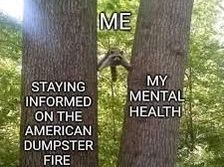
Some weeks inspiration hits and we stumble onto a single topic that has enough going for it that our Tuesday evening conversation revolves around it entirely. Some weeks, like this one, we take a different approach. Tonight, rather than chew on one big idea, we've got a couple of interesting, but generally unrelated questions to animate our discussion. We'll take them on one at a time, in no particular order, and see what develops. Nine years ago New Yorker cartoonist David Sipress drew a cartoon with this caption: "My desire to be well-informed is currently at odds with my desire to remain sane.” Do you experience this tension in your own life, and if so, how do you deal with it? Are you more interested in buying things, or experiencing things? How far will you go to experience something for the first time? What is an example of that? Are you a thrill seeker? An adventure traveler? Something else? Lutheran pastor and writer Nadia Bola-Weber said this: "People don't leave Christianity because they stop believing in the teachings of Jesus. People leave Christianity because they believe in the teachings of Jesus so much, they can't stomach being part of an institution that claims to be about that and clearly isn't." What is your take on this? Do you agree with her? Why or why not? Podcaster Joe Rogan: "Jesus was born out of a virgin mother. What's more virgin than a computer? If Jesus does return, you don't think he could return as Artificial Intelligence? AI could absolutely return as Jesus." OK, is he off his rocker, or do you think he might be on to something? If all else fails, what's on your mind this week? Join us for the conversation this evening, Tuesday Oct. 13 starting at 7pm at Irish Tavern in downtown Lake Orion.
This Sunday, all are welcome to join us for a morning of worship and fellowship. Whether you are with us in the sanctuary or joining from afar, your presence strengthens our community. Our service is at 9:30 a.m. We warmly welcome those who cannot attend in person to join us via our live stream.
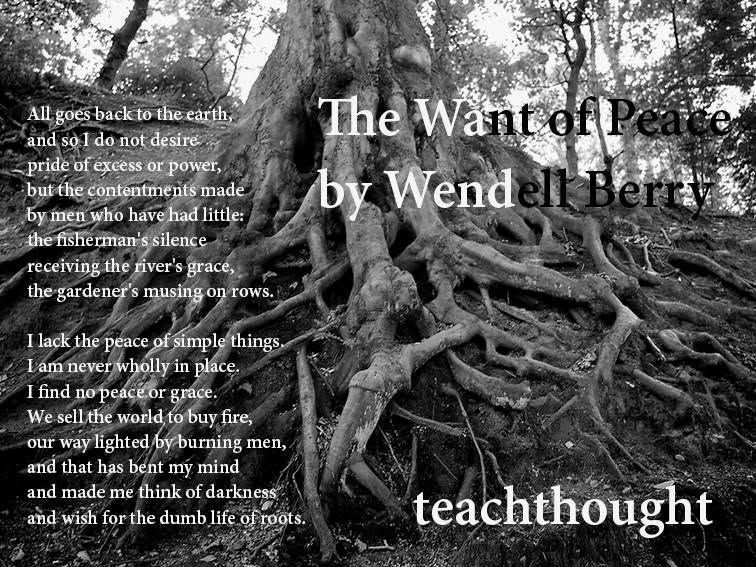
It escaped my notice, so perhaps it escaped yours as well. Back on August 31, the lauded poet, farmer, essayist, and deeply influential thinker Wendell Berry died at the age of 92, in the place he loved best, his farm in Kentucky. Over the years, several of our conversations have been inspired by or touched on Berry's ideas and writings. While Berry has influenced countless Christians through his poetry and fiction, he described himself as a "bad-weather churchgoer." In the preface to his collection of sabbath day poems titled "This Day," Berry explains it this way: "But I am a bad-weather churchgoer. When the weather is good, sometimes when it is only tolerable, I am drawn to the woods on the local hillsides or along the streams… In such places, on the best of these sabbath days, I experience a lovely freedom from expectations — other people’s and also my own. I go free from the tasks and intentions of my workdays, and so my mind becomes hospitable to unintended thoughts: to what I am very willing to call inspiration.." One of the things this quote brings to mind is how important the concept of "place" was in Berry's work and, more importantly, the way he saw the world and how he sought to live in it. Way back in 2017, we talked about the idea of place, with Berry as our guide. "Belong to your place by knowledge of the others who are your neighbors in it ..." This is a very small portion of Wendell Berry's "A Poem on Hope". In his poem, "The Want of Peace," reprinted in the illustration above, Berry writes: "I lack the peace of simple things. I am never wholly in place." So in our conversation this week we're going to revisit this idea of "place," of finding it, belonging to it, and perhaps losing it. There are many ways we can think about this notion. Where do we find peace? Where do we find God? Where do we find ourselves? Where do we find our people, or our purpose? Join us for the conversation tomorrow evening, Tuesday Oct. 6 starting at 7pm at Irish Tavern in downtown Lake Orion.