Pub Theology 10/1/24 -- Hurricanes, floods, and suffering
Peter Trumbore • September 30, 2024

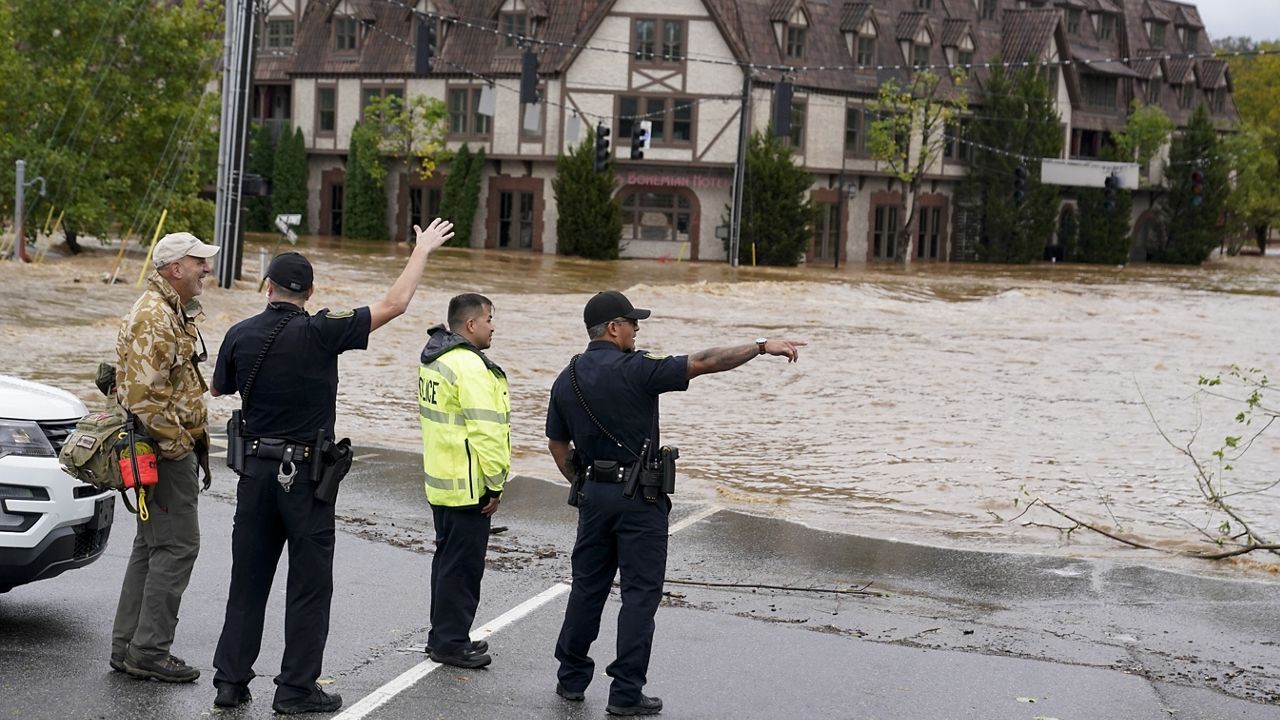
Hurricane Helene brought devastating wind and flood damage to several Southeastern states last week. Especially hard hit were communities in the mountains of eastern Tennessee and western North Carolina, including the city of Asheville.  As of this writing, nearly 90 people have been reported killed across six states, with thousands more displaced. Entire towns have reportedly been "erased" by the power of floods and mudslides, and much of the region remains inaccessible due to destroyed roads and rail lines.


With this in mind, it's worth thinking about one of the great stories of suffering that appears in Scripture. Of course, I'm referring to the Book of Job, which we will start reading next week as part of the Sunday lectionary at St. Mary's. As writer and United Church of Christ pastor Bruce Epperly puts it, the Book of Job is "one of the greatest and most challenging descriptions of both God and the human condition. Job is every man, every woman, and every person who faces unexpected and unanticipated life-changing suffering."


The Book of Job, Epperly suggests, represents an opportunity for us to think about the phenomenon of suffering -- not just ours but that of others as well -- and what that means for our understanding of our relationship with God.


Epperly continues: "Life is difficult. Pain happens. We don’t know its source but we must endure or make the best of it. ...  Job invites [us] to reflect on the universality of suffering. ... No one is immune from suffering of body, mind, spirit, or relationships. It’s only a matter of time. Suffering can ennoble or destroy us. We never fully know our character until we face unwarranted and unexpected suffering. As Viktor Frankl suggests, however, we are called to be worthy of our suffering, and that’s one of the themes of Job. Despite his pain, he must seek to be as moral and noble as possible. For Job, this will mean challenging God’s own justice."


So what are we to take away from all of this? Is God capricious and arbitrary in his omniscience? We might fear such a God, but how on earth could we love or worship him? What is God's role in the suffering we, and others, experience? This is all worth thinking, and talking about, as Epperly notes, "suffering challenges our vision of God and the goodness of the universe."


Join us for the conversation this Tuesday, Oct. 1, beginning at 7pm at Casa Real in downtown Oxford. 
By Andrew Guffey March 1, 2026
This Sunday, all are welcome to join us for a morning of worship and fellowship. Whether you are with us in the sanctuary or joining from afar, your presence strengthens our community. Our service is at 9:30 a.m. We warmly welcome those who cannot attend in person to join us via our live stream.
By Andrew Guffey February 27, 2026
Reflecting on Seven Years
By Peter Trumbore February 23, 2026
We're building our conversation this week around the above quote, that has widely been attributed to English modernist writer and feminist pioneer Virginia Woolf. Before you ask, yes, we are aware that some of Woolf's views, especially on race and class, would make her persona non grata in certain circles today. But that said, the quote is worth thinking about. In some ways it is reminiscent of a quote from C.S. Lewis that was the focus of one of our conversations some eight years ago. Lewis said: "When I became a man I put away childish things, including the fear of childishness and the desire to be very grown up." What both writers seem to be pointing to is the obvious truth that as we age we grow and change. Including our views, our ideas of how the world works, our preconceived notions of ourselves and others. And sometimes that change will feel like loss. What takes the place of those things we've lost? For Woolf, it's other illusions. This brings us back to Woolf's quote. What do you think she is getting at here? Are there illusions that you've had to lose as you've grown older and (hopefully) wiser? What might those be for you? And what about the other half of the quote? What kind of new illusions have we acquired as we've shed others? Finally, are there "comforting illusions" that you still cling to? And to make it a little provocative, is your faith one of them? Come help us sort it all out tomorrow evening. Join us for the discussion Tuesday, Feb. 24 starting at 7pm at Irish Tavern in downtown Lake Orion.
By Andrew Guffey February 22, 2026
This Sunday, all are welcome to join us for a morning of worship and fellowship. Whether you are with us in the sanctuary or joining from afar, your presence strengthens our community. Our service is at 9:30 a.m. We warmly welcome those who cannot attend in person to join us via our live stream.
By Andrew Guffey February 20, 2026
This is us.
By Andrew Guffey February 15, 2026
This Sunday, all are welcome to join us for a morning of worship and fellowship. Whether you are with us in the sanctuary or joining from afar, your presence strengthens our community. Our service is at 9:30 a.m. We warmly welcome those who cannot attend in person to join us via our live stream.
By Andrew Guffey February 13, 2026
Rem ember, you are dust.
By Peter Trumbore February 9, 2026
Every now and again we dip into the archives to bring back a topic from a past discussion. When you've been doing this for more than a dozen years, there's plenty of good stuff to revisit. So we're doing that this week, and it turns out to be a surprisingly timely decision. Next Tuesday marks Random Acts of Kindness Day (yes, really), and it turns out that nine years ago, almost to the very day, our conversation revolved around the idea of random acts of kindness. Since we last talked about it, the idea of random acts of kindness has become surprisingly institutionalized. According to the Random Acts of Kindness Foundation , which actively encourages just such things, "When we choose kindness, our brains light up with oxytocin, dopamine, and connection; reminding us that kindness is not just good for the world, it is good for us." And almost 250,000 people worldwide have signed up with the foundation as RAKtivists, pledging to try to make the world a better place one act of kindness at a time. For its part, the foundation, which aims to make kindness a norm, offers kindness tips and suggestions, creates teaching materials, and encourages kindness in our schools, homes, and in our workplaces. For example, when on social media they suggest: "Scroll until you see someone's creative effort -- a drawing, recipe, a photo -- and leave a genuine, specific compliment." To be honest, that sounds like a really nice idea! Here's the prompt from our discussion way back in 2017: In 1982 Anne Herbert wrote the phrase "practice random kindness and senseless acts of beauty" on a restaurant placemat in Sausalito, Calif. Since then, the call to practice random acts of kindness has become firmly rooted in our social culture. So what's an example of this? When's the last time you were on the receiving end of a random act of kindness? What did that feel like? When was the last time you performed one? How did that make you feel? Is such a gesture really meaningful, or is it a way to avoid making kindness a part of our everyday lives and routines? Join us for the conversation tomorrow evening, Tuesday February. 10 starting at 7pm. We gather at Irish Tavern in downtown Lake Orion.
By Andrew Guffey February 8, 2026
This Sunday, all are welcome to join us for a morning of worship and fellowship. Whether you are with us in the sanctuary or joining from afar, your presence strengthens our community. Our service is at 9:30 a.m. We warmly welcome those who cannot attend in person to join us via our live stream.
By Andrew Guffey February 5, 2026
Where Did Early Christians Think Their Borders Were?