Ashes and Honesty
This is us.
Ashes are hard to clean off. Maybe you noticed that if you attended an Ash Wednesday service. The ashes sink into the pores of our skin, mingled with the sanctifying oil. I have to have lemons handy to clean off the ashes before I handle the Eucharistic bread. Even then, the stain of the ashes lingers around the edges. And I think this is a good thing. It reminds us that the frailty we confess on Ash Wednesday, the confession that we make, and the promises we adopt linger with us, too. It reminds us that we are not just dust today, but that we are dust, and to dust we shall return. The ashes are an honest confession of who we are, an embodied sign of our commitment to see ourselves truthfully.
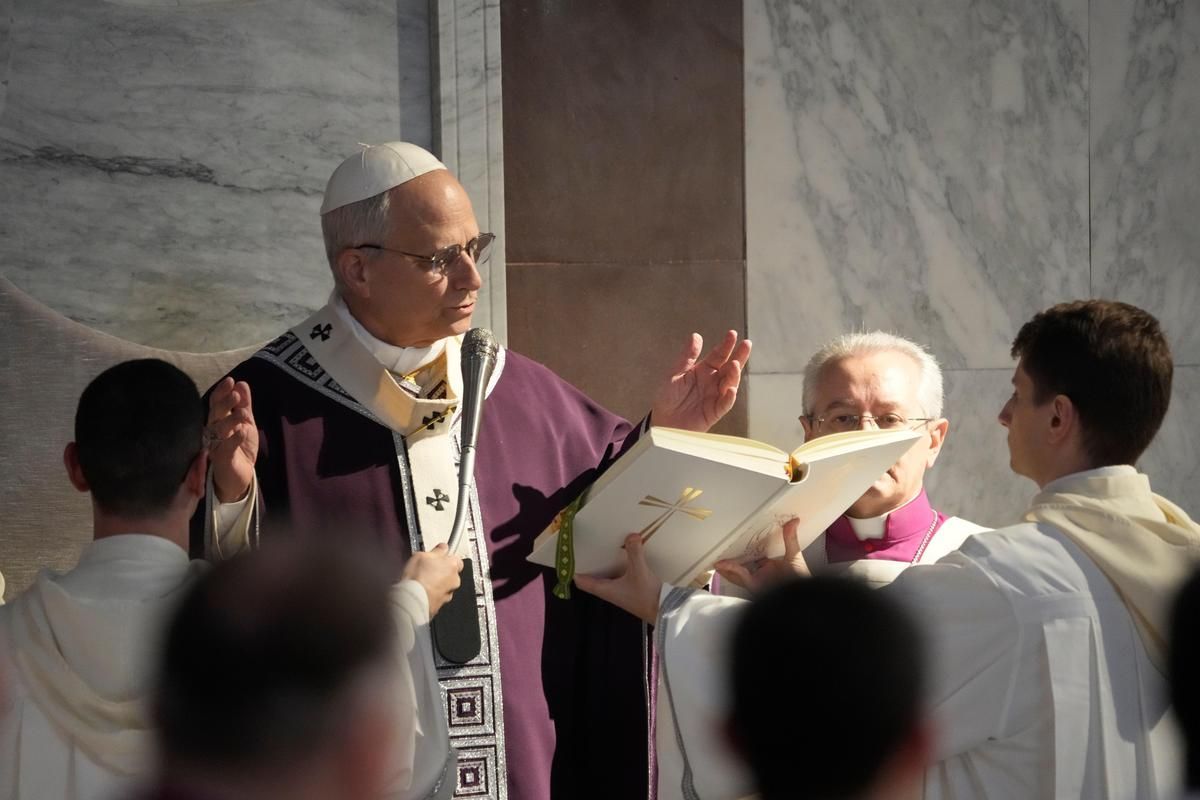
This honesty about ourselves, the ashes of Ash Wednesday, is just the beginning of our process of renewal, conversion, transformation. But don't just take my word for it. On Wednesday, both Pope Leo and Sean Rowe, the Presiding Bishop of the Episcopal Church, gave impassioned Ash Wednesday reflections. Pope Leo's came in the form of a sermon. Presiding Bishop Rowe's in a letter. Both were stirring reflections on what the ashes that stick to us can tell us about our path as disciples of Jesus.
Leo reminded those listening of the need we have to gather as people of Christ, people of peace, a people who recognize their sins:
- Even today, Lent remains a powerful time for community: “Gather the people. Sanctify the congregation” (Joel 2:16). We know that it has become increasingly difficult to gather people together and make them feel like a community — not in a nationalistic and aggressive way, but in a communion where each of us finds our place. Indeed, during Lent, a people is formed that recognizes its sins. These sins are evils that have not come from supposed enemies, but afflicts our hearts, and exist within us. We need to respond by courageously accepting responsibility for them. Moreover, we must accept that while this attitude is countercultural, it constitutes an authentic, honest and attractive option, especially in our times, when it is so easy to feel powerless in the face of a world that is in flames. Truly, the Church exists as a community of witnesses that recognize their sins.
But he goes on to remind us of what is entails in that little word, "sin":
- Naturally, sin is personal, but it takes shape in the real and virtual contexts of life, in the attitudes we adopt towards each other that mutually impact us, and often within real economic, cultural, political and even religious “structures of sin.” Scripture teaches us that opposing idolatry with worship of the living God means daring to be free, and rediscovering freedom through an exodus, a journey, where we are no longer paralyzed, rigid or complacent in our positions, but gathered together to move and change. How rare it is to find adults who repent — individuals, businesses and institutions that admit they have done wrong!
Leo suggested to us, "we perceive in the ashes imposed on us the weight of a world that is ablaze, of entire cities destroyed by war." But it is our honesty about our sin, about our failures to love others as we have been loved, about our failure to act when we should have acted, about our failure to act with mercy, justice, and humility--it is out of the ashes of our honesty that we may yet rise:
- “Where is their God?” the peoples ask themselves. Yes, dear friends, history, and even more, our own conscience, asks us to call death for what it is, and to carry its marks within us while also bearing witness to the resurrection. We recognize our sins so that we can be converted; this is itself a sign and testimony of Resurrection. Indeed, it means that we will not remain among the ashes, but will rise up and rebuild. Then the Easter Triduum, which we will celebrate as the summit of the Lenten journey, will unleash all its beauty and meaning. This will take place if we participate, through penance, in the passage from death to life, from powerlessness to the possibilities of God.
Presiding Bishop Rowe spoke similarly about the conversion of our communities that Lent invites us into:
- Today, in the opening collect of our Ash Wednesday service, we ask God to “create and make in us new and contrite hearts.” I think of Pharaoh’s hard heart, and sometimes my own, when I say that prayer, and never more so than this year. These days, it can seem as if we are living in a wasteland of Pharaoh’s imagination. We see the principalities and powers promulgating violence, dehumanization, and injustice on our streets, and it seems nearly impossible not to react along the lines of the divisions and polarization that our political leaders have championed. It is easy to have a hardened heart. It is tempting to get angry and be governed by outrage, or to grow cold and indifferent.
- If we turn from Pharoah’s imagination toward God’s imagination, however, we find a different path. Jesus tells us to love our neighbor as ourselves. With that great commandment, he is teaching us that we are all one, all part of God’s chosen people, and when we hate and revile each other, we are actually destroying ourselves. Theologian Howard Thurman, whose thinking helped shape the Civil Rights movement, put it like this in “Jesus and the Disinherited”: “The logic of the development of hatred is death to the spirit and disintegration of ethical and moral values.” It is not easy to leave behind Pharoah’s imagination and its toxic drip of polarization that hardens our hearts and minds. The liberation we seek requires the conversion – the turning – of our hearts. We can begin that process anytime, but Lent gives us an opportunity to undertake the work together.
The journey of Lent is not just our personal journey, but it is about our work together. The ashes of Wednesday linger. Let me leave you with some concluding thoughts from Pope Leo's Lenten Message from earlier this month:
- Likewise, our parishes, families, ecclesial groups and religious communities are called to undertake a shared journey during Lent, in which listening to the word of God, as well as to the cry of the poor and of the earth, becomes part of our community life, and fasting a foundation for sincere repentance. In this context, conversion refers not only to one’s conscience, but also to the quality of our relationships and dialogue. It means allowing ourselves to be challenged by reality and recognizing what truly guides our desires — both within our ecclesial communities and as regards humanity’s thirst for justice and reconciliation.
- Dear friends, let us ask for the grace of a Lent that leads us to greater attentiveness to God and to the least among us. Let us ask for the strength that comes from the type of fasting that also extends to our use of language, so that hurtful words may diminish and give way to a greater space for the voice of others. Let us strive to make our communities places where the cry of those who suffer finds welcome, and listening opens paths towards liberation, making us ready and eager to contribute to building a civilization of love.
Whether you received the ashes on Wednesday or not, our work remains. May this Lenten season encourage us to deeper listening, greater honesty, emboldened compassion, and hearts and hands attentive to the God in our midst, who raises us from the dust to be children of the living God who is Love.