
Boldness before God

Andrew Guffey • June 5, 2026

Christians and (Gay) Pride

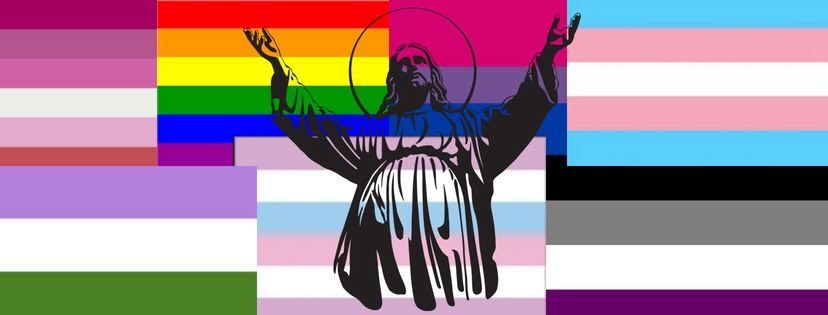
June is Pride Month, a month of affirmation for LGBTQ individuals and communities. Pride celebrations coincide with, and to a degree commemorate, the 1969 Stonewall Riots, a major turning point in the struggle for the acknowledgment of gay rights and acceptance in America. For those of you intimately connected to LGBTQ folks, none of this is news, and you do not need me to say anything about the meaning of Pride, but I have encountered a number of people in my years of ministry who wonder: how should Christians think about Pride Month? Note: I am not talking about whether being gay is a sin. It's not. That's a place I'll plant my flag unequivocally, and if you disagree I'm happy to have a biblical discussion about that anytime. Still, even some very well-intentioned folks have questions about Pride. Some have asked me, for instance, isn't pride a sin? Why, then, celebrate queer identity with pride? Some have suggested that Pride celebrations are often a hot, drunken mess. Having served at a restaurant in Boys Town, Chicago, there's a measure of truth to that characterization in some places. But instead of asking about the legitimacy of Pride, what if we were more prone to wonder? What if we asked ourselves what we, as Christians, might stand to learn from the celebration of LGBTQ Pride?


In some ways this is really not a conversation we desperately need to have. No one seems to mind when the Irish (and those who pretend to be Irish or wish they were Irish or are 1/284 Irish) have their pride on when they celebrate St. Patrick's Day. We don't get similarly squeamish when people wrap themselves in red, white, and blue around July 4th and announce their pride in being American. So why single out LGBTQ Pride? (By the way, in case you are unfamiliar LGBTQ stands for Lesbian, Gay, Bisexual, Transgender, Queer. Sometimes it is augmented with further initials like "I" for Intersex and "A" for Asexual.) Well, in part because, just like with the Black is Beautiful or Black Lives Matter movements, it is queer lives (I use that term broadly to refer to the several communities represented in Pride, not as a derogatory slur) that have been repressed, oppressed, hidden away, denied, and delegitimated--that is, historically it is people who happen to be queer who were discriminated against because they were queer. And since it is Pride month, let's lean into our wonderment again: What can LGBTQ Pride teach us as Christians? What do we stand to learn about who we are and how God is moving through humanity in this world.
The first thing that cannot be missed is that Pride events are wonderfully embodied. The Pride events I have attended are all people physically gathered in celebration, and attention is drawn to our bodies. In the Diocese of Chicago I marched behind our Diocesan banner at one Pride parade, wearing my collar. My body mattered, how it was presented mattered. It mattered that I was there, marching. It mattered that I was wearing a collar. It mattered that I could give and receive hugs. And our bodies matter, too. Life is not disembodied. That's what made parts of our COVID experience so hard--we couldn't be embodied together, couldn't hug, couldn't draw close. And didn't we all feel a little (or a lot!) more isolated? Pride can be a reminder that while we are not simply our bodies, apart from our bodies we are not. This is not a fact to be lamented, but a fact to be celebrated. Sure they can be frail and fail us, and they are the conduit of pain and aches, but they are also sources of our joy, the electricity of being alive courses thought our bodies. God gave us bodies, thanks be to God!


Secondly, we were made for joy. While it is true that some Pride celebrations are a little over-joyful, as is true with any kind of party--occasionally one does get over-served at weddings, for instance--the joy itself is palpable. The Westminster Catechism begins with the question, "What is the chief end of man?"--what are humans made for? The answer is "to glorify God and enjoy God forever." We were made for delight, and Pride can be a reminder of that fact. Abraham Joshua Heschel, one of the preeminent Jewish figures of the twentieth century wrote a beautiful book on the keeping of the Sabbath. Among other things he reminds his readers that "it is a sin to be sad on the Sabbath day." What? How can we control our sadness or happiness? I don't think the good rabbi meant that one must repress all negative emotions, but that the Sabbath is a reminder that we are not made for despair, and when we live toward despair we live in a direction counter to what God made us for. The Sabbath, Heschel says, is a palace in time. To use somewhat more Christian language, it is a day to live as though the kingdom of God has come:

All week we may ponder and worry whether we are rich or poor, whether we succeed or fail in our occupations; whether we accomplish or fall short of reaching our goals. But who could feel distressed when gazing at spectral glimpses of eternity, except to feel startled at the vanity of being so distressed. The Sabbath is no time for personal anxiety or care, for any activity that might dampen the spirit of joy. The Sabbath is no time to remember sins.... It is a day for praise, not a day for petition. Fasting, mourning, demonstrations of grief are forbidden.

And why are all of these to be avoided on the Sabbath? Because "the Sabbath was given to us by God for joy, for delight, for rest. Pride at its best can be the same--a glimpse of eternity, where all of God's children are at harmony, at peace, because all are cherished, honored, and loved just for who they really are.


And that brings me to the third thing I think we might learn from Pride: joy in being honest about who we are. I don't mean joy in our rough edges and vices. But joy in how we are fashioned, joy in being "wonderfully and fearfully made" (Psalm 139:14) by a God who knows us as he knew Jeremiah, from our mother's womb (Jeremiah 1:5), when we were woven and spun in secret (Psalm 139:15), and who knows the plans God has for us, plans for good and not for evil (Jeremiah 29:11). Joy in being created in God's own image, after God's own likeness. Joy at being a living spirit, a living body. Pride might teach us what it means to regard ourselves with the love that God bears us, with all the glory and shame that we carry.


I have never needed to question my sexuality or my gender. I understand myself relatively well, and I have never had occasion to question those basic things that I have taken for granted since my earliest days. But our queer siblings have. Some of them have had to wrestle and fight bravely the battle to be honest with themselves, their families, their friends, and their God about who they are. Pride honors that struggle to be honest, to be and live truly. And we should honor that also. Because many of them are living truer lives than those of us who have never needed to question basic structures of who we are. One priest and author once wrote about this experience as one of discernment, that LGBTQ folks necessarily undergo a deep process of discernment to arrive at peace with themselves, the world, and God. She likens it to the call of Isaiah, when Isaiah is overcome with a vision of God in the Temple and hears God say, "Whom shall I send? Who will go for us, " and Isaiah says, "Hineni! Here I am! Send me!"


In the New Testament, the word parrhesia comes up in several key places. It means "boldness." The Acts of the Apostles (ch. 4) speaks of the boldness of the apostles as they proclaim the Gospel of God in Christ. First John says that if our hearts do not condemn us, we have boldness before God (1 John 3:21), love perfected among us "that we may have boldness on the day of judgment" (1 John 4:17), and the "boldness we have in him" that we might ask anything that accords with his will and God will hear us (1 John 5:14). Paul talks about his boldness in sharing the Gospel (Philippians 1:14, 20). But it is Hebrews where the theme rings out the loudest: "Let us therefore approach the throne of grace with boldness, so that we may receive mercy and find grace to help in time of need" (4:16); "Do not, therefore, abandon that boldness of yours; it brings great reward" (10:35). Boldness is living unafraid of who we are, with delight in who and how we are created to be. And Christ shows us this boldness in living his life in the face of those who wanted to tone him down. But, as Hebrews says, "Christ, however was faithful over God's house as a son, and we are his house if we hold firm the boldness and the pride inspired by hope."


Pride is about living our lives out loud. Not with dishonest noise or distracting static, but with the clear melody of the song woven into each of our lives, drawing from the deep reservoir of the Love that fashioned us before we were and will hold us forever. Pride is boldness before God to live our lives honestly. Pride celebrations can, I think, remind us how to live like that. It's not easy: it takes patience, and reflection, and not a little courage. But if we can find our way to it we might just find the joy we were made for.
By Andrew Guffey May 30, 2026
Pope Leo on the challenges of our times
By Peter Trumbore May 26, 2026
Some years ago I was having a conversation with a student when she noticed the Jesus action figure on the bookshelf behind my desk. What, doesn't everyone have a Jesus action figure in their office? Anyway, this led to a conversation about churches and church traditions. She had grown up in the Pentecostal church and asked me what I thought of the practice of speaking in tongues. I told her it wasn't part of my church tradition, but that I understood it as one of the gifts of the spirit that Paul identifies in 1 Corinthians 12:8-10, though I admitted my own skepticism that the way speaking in tongues is typically practiced was actually divinely inspired. And I followed up with a question of my own. I asked whether in her church she had ever encountered someone with the gift of the interpretation of tongues, another on Paul's list. She said she hadn't, though she didn't attach any real significance to that. I was reminded of this conversation in church on Sunday when one of our readings was that very section of Paul's letter. In it he identifies the variety of gifts that the spirit may impart, emphasizing that for all of the differences in gifts, they all come from or flow through the same spirit. Here's Paul's list: utterance of wisdom through the spirit; utterance of knowledge according to the spirit; faith; gifts of healing; the working of powerful deeds; prophecy; discernment of spirits; various kinds of tongues; and the interpretation of tongues. I reading up for this topic, I came across a piece written by a Pentecostal writer who says that when he finds himself in periods of spiritual crisis he prays in tongues for wisdom from God. I honestly have no idea what that means in practice. Perhaps I've not sufficiently opened myself up to receive the Holy Spirit. Or maybe I just don't get it. I suspect I'm not the only one baffled here. So let's talk about it in our conversation this evening. What do you make of Paul's list of the gifts of the spirit? Do you take their meaning literally, or is this more metaphorical and rhetorical? Have you ever experienced any of these gifts firsthand, either in yourself or witnessed in others? If you were coming up with such a list today, what would be on it? Join us for the discussion this evening starting at 7pm at Irish Tavern in downtown Lake Orion. The weather is beautiful, so we may be out on the patio. Look for us there. And a reminder, this is our last meeting before we take our break for the summer. We'll swing back into action in September.
By Andrew Guffey May 26, 2026
This Sunday, all are welcome to join us for a morning of worship and fellowship. Whether you are with us in the sanctuary or joining from afar, your presence strengthens our community. Our service is at 9:30 a.m. We warmly welcome those who cannot attend in person to join us via our live stream.
By Andrew Guffey May 23, 2026
This Sunday, all are welcome to join us for a morning of worship and fellowship. Whether you are with us in the sanctuary or joining from afar, your presence strengthens our community. Our service is at 9:30 a.m. We warmly welcome those who cannot attend in person to join us via our live stream.
By Andrew Guffey May 23, 2026
Over the bent world broods
By Peter Trumbore May 18, 2026
With mid-May upon us, and summer on the doorstep, we are well and truly into spring, typically seen as a season of renewal. A couple of things have brought this to my mind this week. And not just the flowers growing up and around and through the old animal skulls that we artistically left in the chaos garden behind the house when we moved in two springs ago. For context, these used to hang on the wall in the garage at our old house. First, in typical New York Times fashion, their podcast The Daily last week ran a piece on what was claimed to be Americans' "revisiting of religion," and "putting secularism on hold." I listened to the thing, and what it seems to be based on is anecdotal evidence drawn from conversations that the writer of their Belongings newsletter has had with friends, acquaintances, and her family members over the last year or two of her writing the newsletter. Classic New York Times! But still something to contemplate, especially her argument that this turn back to religion is being driven by people's desire for community, connection, and meaning in their lives. Second, and in an echo of our topic of discussion last week, The Washington Post last week ran a piece by a religion professor at the University of North Carolina Wilmington proposing that the government's release of new previously classified material on UFOs was offering support and recognition of a new religion, belief in UFOs. The author writes: "UFO belief is not a religion in the traditional sense. There are no centralized leaders: no popes, no universally recognized doctrines, no sacred text and no institution capable of enforcing orthodoxy. Yet it increasingly performs many of the functions historically attributed to religion. It organizes communities of belief, creates narratives of revelation, offers cosmological meaning and establishes interpretive frameworks through which people understand mysterious experiences and humanity’s place in the universe." A key idea here is that UFO religion is profoundly anti-institutional, built on a foundation of distrust of government, mainstream media, academia, and organized religion. But again, driven by people seeking community, connection, and meaning. Finally, over the weekend there was a White House-sponsored all-day prayer event on the National Mall in Washington D.C. aimed at "rededicating" America as "One Nation under God." Of course it was a decidedly Christian and evangelical version of God that was the focus. Still, thousands showed up and participated. More people looking for and apparently finding some kind of connection, community, and meaning. And a form of renewal at least in the eyes of the organizers and participants in the event. We're going to talk about the idea of renewal in our conversation this week. Are we in a time of spiritual or religious renewal in this country, as the above examples suggest? What would such a thing look like? Would we know it if we saw it? And is it renewal at all, or something different? Join us for the discussion starting at 7pm Tuesday, May 19 at Irish Tavern in downtown Lake Orion.
By Andrew Guffey May 17, 2026
This Sunday, all are welcome to join us for a morning of worship and fellowship. Whether you are with us in the sanctuary or joining from afar, your presence strengthens our community. Our service is at 9:30 a.m. We warmly welcome those who cannot attend in person to join us via our live stream.
By Andrew Guffey May 15, 2026
The Feast of the Ascension 
By Peter Trumbore May 11, 2026
Just last week, the federal government released their latest set of "disclosures" concerning UFOs, or, as the government now calls them, "Unidentified Anomalous Phenomena," (UAPs). Or what we used to call flying saucers and little green men, The collection of photos and reports was met with what could best be described as an underwhelming response. Writing in The Atlantic, astrophysicist Adam Frank put it this way: "Spaceships. That’s all I’m asking for. Just one actual stinking spaceship. I’d also take an actual alien body—I’ve been told that the government has some of them as well. Instead, the first “alien files,” released yesterday, appear to be the same old, same old: stories, but no hard evidence—certainly not of the kind I’d want to see as a scientist, or that could truly advance the debate about UFOs and their alien connection. ... I am disappointed." If you read that like I did, then I suspect you too have echoes of the story of Doubting Thomas ringing in your ears. We hear the story of Thomas right after Easter. It recounts the disciple's unwillingness to accept the fact of the resurrection unless he can see and touch the evidence for himself. Thomas needed to see the marks and put his fingers in the wounds before he'd believe that Christ had risen from the dead. This raises the obvious question of what counts as evidence, whether we're talking about the truth of the existence of UFOs and extraterrestrial intelligence, or any other phenomenon we accept as true without ever having seen or experienced for ourselves. Take earthquakes, for example. I know they exist but I've never seen or felt one in real life. Or Bigfoot. I know Bigfoot is real even though I've never laid eyes on the critter. OK, maybe not Bigfoot. And maybe not the supposed "mummified aliens" that were displayed several years ago on the floor of the Mexican congress. One of them is shown in the photo above. Let's just say that in this case seeing was not necessarily believing, as this report from Reuters attests. The latest set of disclosures on UFOs has also been met with more than a healthy dose of skepticism. The Associated Press reports that the latest releases leave the task of interpreting the meaning of the photos and the reports to the public themselves. For the astrophysicist Frank, that's not good enough: "A real disclosure would look very different, because only one thing matters: hard evidence." So let's talk about this question of evidence in our conversation this week. What would it take for you to believe in the reality of UFOs, or, for that matter, anything else that lives outside the realm of your own personal experience? What counts as evidence for you, whether the question is about UFOs, or Bigfoot, or the resurrection for that matter? Join us for the discussion starting at 7pm. Due to the water main failure's impact on Lake Orion, we will meet this week at Sullivan's Public House in downtown Oxford. Parking is easiest behind the restaurant. We will probably be seated upstairs, so if you don't see us when you arrive, look for us there.
By Andrew Guffey May 9, 2026
This Sunday, all are welcome to join us for a morning of worship and fellowship. Whether you are with us in the sanctuary or joining from afar, your presence strengthens our community. Our service is at 9:30 a.m. We warmly welcome those who cannot attend in person to join us via our live stream.