Praying with our Bodies
Episcopal Customs
Sit, stand, kneel, rinse, repeat.
In Pirates of the Caribbean there is a running joke about the "Pirate's code" (any man who falls behind gets left behind, etc.). At various points, different characters in the film say that the Pirate's code is less a set of actual rules and more like guidelines. In our church, as in many other "liturgical" churches, we have a number of ceremonial habits. Not actual rules, but more like guidelines, habits that we have, customs we observe. Not everyone is aware of them, but maybe you've noticed and wondered about them.
One of the most ubiquitous and versatile of gestures among Christians of many stripes is the sign of the cross. A simple gesture, but one that can carry a great deal. In his letter to the Galatians, St. Paul wrote, "For I am crucified with Christ, nevertheless I live, yet it is not I that live, but Christ who lives in me, and the life that I now live in the flesh, I live by the faith of the Son of God, who loved me and gave himself for me" (Galatians 2:20-21). Making the sign of the cross is a memorial of that sacrifice and that love that bind us to Jesus. It is a silent prayer of adoration, gratitude, self-dedication, and also an invocation. It calls on Jesus to draw near to us in that moment. It might be that we see something that shakes our soul (passing a bad traffic accident) or stirs us to wonder (catching a glimpse of a beautiful sunset). Most often we find people doing it at various points in church. Upon entering the church, or upon entering the sanctuary you might find someone making the sign of the cross. They may dip their fingers into the holy water font at the back of the church (a reminder of our baptism) and crossing themselves with the holy water before they enter the sanctuary. A simple gesture, it is, in itself, a prayer. Sometimes words will not come, but this simple gesture can draw us into the presence of God. It is customary to make the sign of the cross also at any blessing, at "the resurrection of the dead" in the Creed, and sometimes at the words of institution ("This is my body...this is my blood'). Many of the Eastern Orthodox cross themselves three times at any mention of the Holy Trinity.
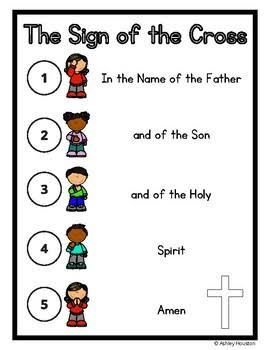
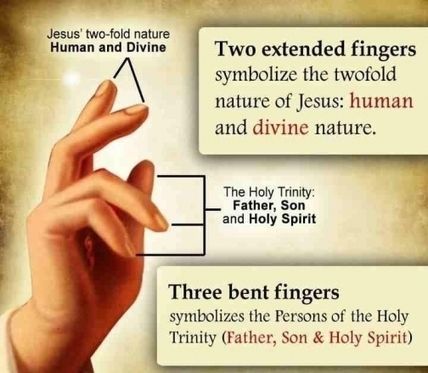
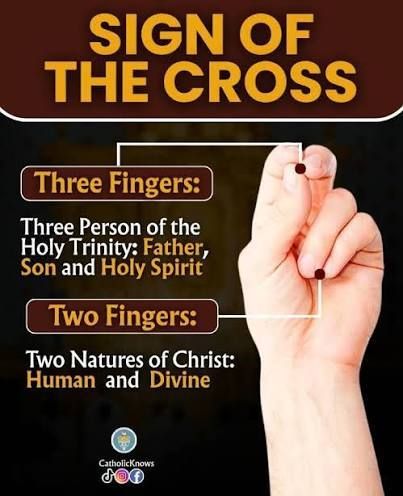
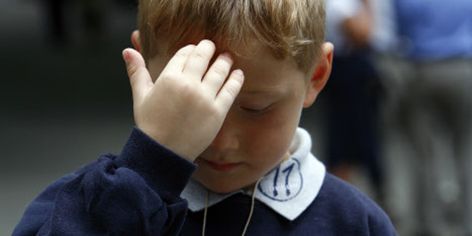
Different people make the sign differently. Probably most do as the boy in the picture, open hand, touching the forehead, middle of the chest, then left shoulder, then right, then back to the middle (your heart). The Orthodox go to the right shoulder first and simple end on the left near their heart. Some add the words "In the Name of the Father, and of the Son, and of the Holy Spirit. Amen." to their gesture (see the illustration below). Others touch their thumb, index, and middle fingers together to make the sign (symbolizing the Trinity). But there's really no right or wrong way. What matters is that it is an embodied prayer. What matters is the intention.
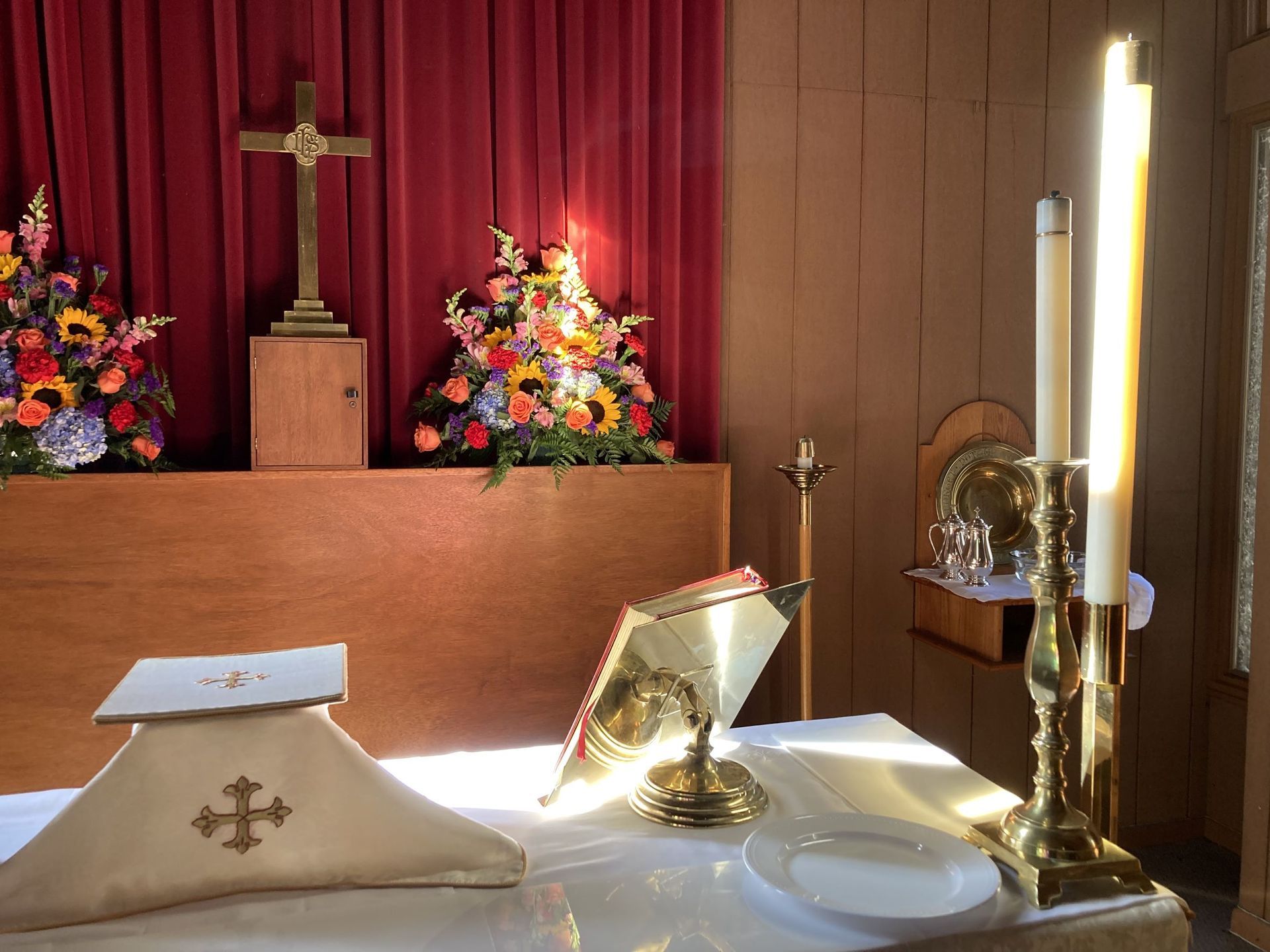
Another habit many Christians have is to genuflect (dropping to one knee and making the sign of the cross) or bow to the altar (really to the presence of Christ at the altar, in the reserved sacrament). It is customary to do so entering and exiting one's pew, especially when approaching the altar. Again, this is a prayer of the body, an acknowledgement of the mystery before which we stand, and the One to whom we owe our allegiance. We bow to the gravity of God's grace at the altar.
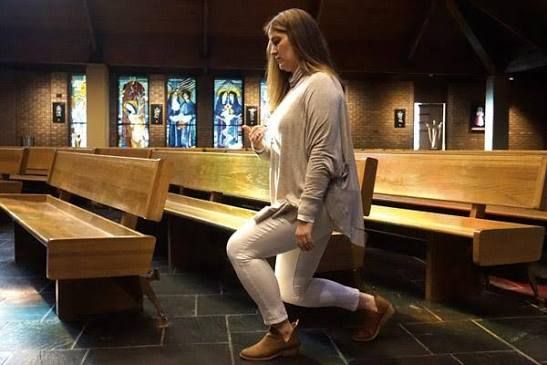
Speaking of bowing, you might also notice some folks bow when the cross goes by (at the opening procession, the Gospel procession, or the closing recession). Again, this isn't about worshiping that material object, but it is a way of showing reverence to the mystery before which we stand, a way of acknowledging that, actually, we are not the center of the universe or of history, but rather, Christ and the mystery of Christ's passion is. Bowing to the cross is our gesture of humility before the God whose grace is boundless.
So, there are three small habits of worship: making the sign of the cross, genuflecting toward the altar, bowing to the cross. Maybe they feel uncomfortable for you. Maybe you just never knew what they were all about and you'd like to give them a try. (Please do!) Sometimes even the best crafted words don't reach us or seem too verbose or remote from our lived experience, but praying with our bodies is always immediate, no words required. It's our way of drawing into God's presence with all that we are, of seeking a blessing that we might be a blessing.