Pub Theology 5/27/25 -- High on faith

Peter Trumbore • May 27, 2025

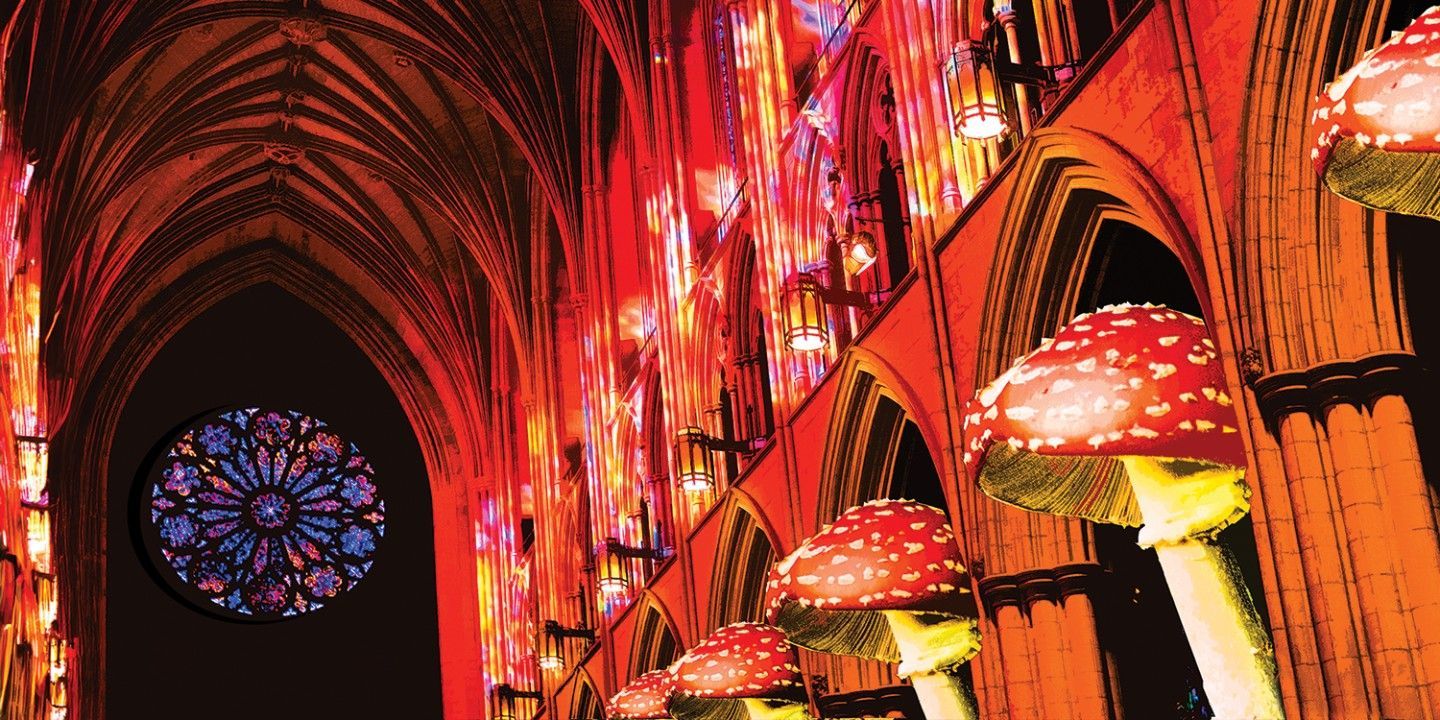
Some seven years back, researchers at NYU and Johns Hopkins University launched a study in which they enlisted some two dozen religious leaders from a variety of  traditions -- priests, pastors, rabbis, Zen Buddhist monks, Islamic prayer leaders -- to take part in a research project exploring psychedelics and sacred experience. The experiment was intended to assess whether a transcendental experience makes the leaders more effective and confident in their work and how it alters their religious thinking. You can read about the setup of the study in this article from The Guardian.


It turns out that the study produced some really interesting results. A story published a few weeks ago in The New Yorker tells the tale. Unfortunately that article is locked behind a paywall, but the author, Michael Pollan (who has written extensively about the use of psychedelics and their effects), however, summarized some of what the study found in this interview. Pollan writes that the participants described their regarded their mushroom-induced trips as authentic mystical experiences, not just a drug experience. For some, the experience was truly transformative.


One of the surprising findings that Pollan remarked upon was that "their experiences were not always consistent with the imagery or symbolism of their own faiths. One Christian theologian said God was like a Jewish mother. In fact, most of the people I interviewed felt that the divine they encountered was feminine. That blew their minds; and it blew mine, too. ... Just about everybody had an encounter with the divine, and for the most part it was a feminine, nurturing, sweet presence. We have such a patriarchal understanding of religion, and most stereotypes of God are gendered masculine. So I think it’s ironic, and somewhat humorous, that under the influence of psychedelics God turns out to be more female than male."


Nearly all of the participants rated their first experience with psilocybin as among the top five most spiritually significant events of their lives. Among participants who had two sessions, the researchers found that a striking number—seventy-nine per cent—reported that the experience had enriched their prayer, their effectiveness in their vocation, and their sense of the sacred in daily life. It turns out that there is a long history of people trying to trace a connection between the early Christian church's eucharistic practice and psychedelic substances, though scholars have their doubts. This article from The Christian Century goes into some of that fascinating story.


For our conversation this evening, we're going to talk about psychedelics and spirituality. Do you have experience with this? If so, what was your experience like? If not, would you try it? Do you feel that a spiritual experience augmented by substances is more or less valid than other spiritual experiences? The discussion starts at 7pm tonight, May 27, at Casa Real in downtown Oxford.

By Peter Trumbore January 19, 2026
It has been our practice in recent years to try to build our discussion around the words of the Rev. Dr. Martin Luther King, Jr. whenever our conversation falls around the celebration of his birthday. This seems especially appropriate this year given the events unfolding in Minneapolis and elsewhere since the start of the new year. This time we're going to focus on the idea referenced in our illustration above. This is often misquoted as "the arc of the universe ..." which leaves out King's important qualifier, the "moral," universe, not the universe more generally. Before we did deeper, what do you think is the key difference or differences between the two ideas, the universe generally vs. the moral universe? King used this quote many times in his sermons and speeches, and according to Stanford University historian Clayborn Carson , he borrowed it from 1850s abolitionist Theodore Parker. In fact, King drew quite heavily on the oratorical tradition of the early abolitionists, bringing their words and sentiments to bear in the 1960s struggle for civil rights. But what are they getting at here? Is the idea that while things may be bad now, if we wait long enough the scales will tilt to the side of justice? Or is it not that simple. What this little snippet of a quote does not do, is give any suggestion as to how the arc of the moral universe bends. Or what is required to make it do so. So what do you think? If the arc of the moral universe ultimately bends toward justice, by what mechanism or mechanisms does it do so? And what is our role in that process? Now that I think about it, this train of thought is kind of a continuation of something we landed on last week in our discussion of hope. James McGrath, a professor of New Testament language and literature at Butler University, addresses things this way: "The arc of the universe may bend towards justice, but it certainly does not do so in a steady and straight line. Precisely because of the slow but real progress ... the racists, misogynists, antisemites, Islamophobes, and homophobes are offering a backlash. Progress towards equality has always involved a process like this. It is important to emphasize that, because those of us who are living through this particular moment can feel like these are unprecedented times." Join us for the conversation this week as we talk about the arc of the moral universe and how it bends. And if this isn't a meaty enough topic, here's one more MLK quote that we can chat about if we have the time: "If any earthly institution or custom conflicts with God’s will, it is your Christian duty to oppose it. You must never allow the transitory, evanescent demands of man-made institutions to take precedence over the eternal demands of the Almighty God." The only trick here, of course, is figuring out what does and does not conflict with God's will, and who decides. Come out of the cold this Tuesday evening, Jan. 20, and let us know what you think. The discussion starts at 7pm at Irish Tavern in downtown Lake Orion.
By Andrew Guffey January 18, 2026
This Sunday, all are welcome to join us for a morning of worship and fellowship. Whether you are with us in the sanctuary or joining from afar, your presence strengthens our community. Our service is at 9:30 a.m. We warmly welcome those who cannot attend in person to join us via our live stream.
By Peter Trumbore January 13, 2026
I don't know about you, but it feels like 2026 has gotten off to a really rocky start. Where even to begin? Wars, and threats of war. Economic turmoil and uncertainty. The actions of federal agents causing chaos, fear, and sadly, deaths and injuries to innocent people. In short, things look pretty bleak, and what's over the horizon doesn't seem all that much better. In fact, the pessimists among us might suggest that things will continue to get worse. What are we to do? Is there anything you're looking forward to this year? Is there anything you're hopeful about? And is hope even the answer? The quote in the illustration above has been attributed to a number of different people over the years, from film director James Cameron to legendary football coach Vince Lombardi as well as various military leaders and politicians. It shows up in movies like "F1" and "Deepwater Horizon." And in "Mad Max: Fury Road," Max says: "Hope is a mistake. If you can't fix what's broken, you'll go insane." Go back far enough and we get a variation of this from the classical Greek historian Thucydides in the Melian Dialogue from his "History of Peloponnesian War" Here he calls hope "danger's comforter" that can only be indulged in by those possessing the abundance of resources necessary to avoid disaster when things go wrong. And yet we are told that the Christian message is one of hope. The idea that our "hope is in the Lord" appears in countless scriptural passages, hymn texts, and sacred poetry. For example, in the hymn "I'll seek his blessings," A.M. Cagle writes: "My hope is in the Lord, the blessing bleeding lamb. I'll seek his blessings every noon." So in our conversation this evening, we're going to talk about hope. What does it mean to you? Where do you find it in these difficult times? Is hope a strategy, or is it "danger's comforter'? In short, is hope a luxury for the few fortunate enough to be able to ride out whatever storms comes next? Is hope a mistake? Join us for the discussion tonight, Jan. 13, starting at 7pm at Irish Tavern in downtown Lake Orion.
By Andrew Guffey January 11, 2026
This Sunday, all are welcome to join us for a morning of worship and fellowship. Whether you are with us in the sanctuary or joining from afar, your presence strengthens our community. Our service is at 9:30 a.m. We warmly welcome those who cannot attend in person to join us via our live stream.
By Andrew Guffey January 4, 2026
This Sunday, all are welcome to join us for a morning of worship and fellowship. Whether you are with us in the sanctuary or joining from afar, your presence strengthens our community. Our service is at 9:30 a.m. We warmly welcome those who cannot attend in person to join us via our live stream.
By Andrew Guffey December 24, 2025
On Christmas Eve, all are welcome to join us as we celebrate the birth of Christ. Whether you are worshiping with us in the sanctuary or joining from afar, your presence is a meaningful part of our community as we gather on this holy night. We invite you to join us for one of our Christmas Eve services: 7:00 p.m. Festal Choral Eucharist 11:00 p.m. Contemplative Midnight Mass Those who are unable to attend in person are warmly invited to join us via our live stream for the 7:00 p.m. service.
By Andrew Guffey December 21, 2025
This Sunday, all are welcome to join us for a morning of worship and fellowship. Whether you are with us in the sanctuary or joining from afar, your presence strengthens our community. Our service is at 9:30 a.m. We warmly welcome those who cannot attend in person to join us via our live stream.
By Andrew Guffey December 14, 2025
This Sunday, all are welcome to join us for a morning of worship and fellowship. Whether you are with us in the sanctuary or joining from afar, your presence strengthens our community. Our service is at 9:30 a.m. We warmly welcome those who cannot attend in person to join us via our live stream.
By Peter Trumbore December 8, 2025
You may have run across this story over the last week or so, but if not, the above is the Nativity scene on display out from on St. Susanna Parish, a Roman Catholic church in Dedham, MA, a suburb of Boston. Notice what's missing from the scene: Yep, Mary, Joseph, and the infant Jesus are gone, replaced with the sign "ICE was here," a reference to the federal agency that has been engaged in aggressive raids and detentions targeting immigrants and refugees the government argues are in the country illegally. The implication, of course, is that the religious figures have picked up for immigration violations. Despite criticism from some in the Dedham community, and leaders of the Catholic Archdiocese of Boston, the parish says the display will be kept as it is: "Father Stephen Josoma said he chose to focus the nativity on immigration after speaking with several of the refugee families the church has worked with in the past few years. Several of his congregants, who come from countries like Honduras, Guatemala and Afghanistan, expressed fear about what the stepped-up deportations could mean if they were sent back to the violence they fled. ... He said th.e display is meant to show “the context Christmas is happening in this year,” adding that current immigration policies feel “brutal” and threaten the status of people who have already settled in the U.S." A spokesman for the archdiocese called the scene "politically divisive" and called on the parish to return the display to its "proper sacred purpose." You can read more in this article from Boston Public Radio station WBUR . For its part, the parish says it has no plans to budge on its nativity display, which for more than a decade has served as a vehicle for the congregation to comment on politically charged issues like gun control, climate change, and immigration. What do you make of this? Both the specific display at St. Susanna's this year as well as the larger idea of using a Nativity scene to comment on controversial issues of politics and social justice? Josoma, the parish's rector, acknowledges that some people might just want to come and see "a nice little place for baby Jesus and his family to celebrate Christmas," but that he believes religious art should engage the viewer in more profound ways. So is this sacrilegious or a creative act of bearing witness? After all, in the Gospel of Matthew we learn that a few days after Jesus birth an angel comes to Joseph and warns him to flee with his family to Egypt to escape King Herod's plans to find and kill the infant Jesus. Is the parish's display an act of political resistance, and is that appropriate for a church? Join us for the conversation tomorrow evening, Tuesday Dec. 9, starting at 7pm at Irish Tavern in downtown Lake Orion.
By Andrew Guffey December 7, 2025
This Sunday, all are welcome to join us for a morning of worship and fellowship. Whether you are with us in the sanctuary or joining from afar, your presence strengthens our community. Our service is at 9:30 a.m. We warmly welcome those who cannot attend in person to join us via our live stream.