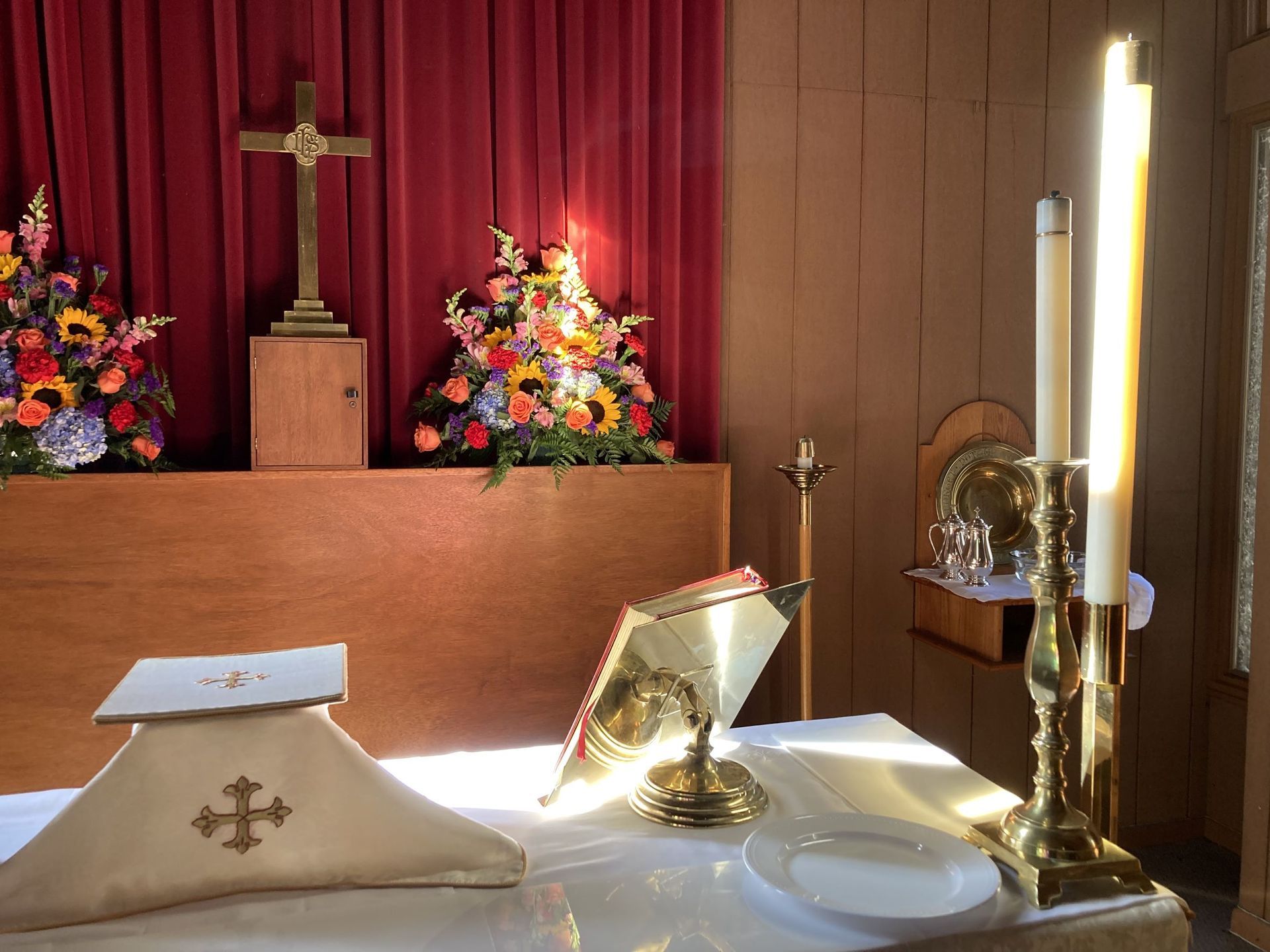
Christ is Risen.
The Lord is Risen Indeed.
Easter is not just a day, but a season, fifty days long, until Pentecost. During the Easter Season we use the acclamation: Alleluia! Christ is risen. And the response: The Lord is risen indeed. Alleluia! Christ is risen. That's an odd way of putting it, isn't it? We might say Christ has risen, right? Except we would miss something important if we did. In one of our Eucharistic prayers, we proclaim the mystery of faith: "Christ has died. Christ is risen. Christ will come again." Is that just a euphonic way of saying Christ died, then Christ rose, and we expect Christ to come again? It's not actually. Because when we say Christ is risen, we mean Christ is the Living One.
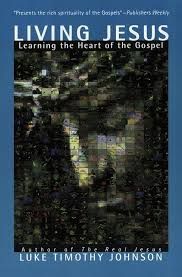
"It makes a big difference whether we think someone is dead or alive. To the person in either of those conditions it probably makes an even bigger difference. But it certainly also matters to anyone interested in that person." That's how biblical scholar Luke Timothy Johnson opens his book, Living Jesus: Learning the Heart of the Gospel. And so, he claims: "The most important question concerning Jesus, then, is simply this: Do we think he is dead or alive?" He goes on:
"If Jesus is simply dead, there are any number of ways in which we can relate ourselves to his life and his accomplishments. And we might even, if some obscure bit of data should turn up, hope to learn more about him. But we cannot reasonably expect to learn more from him.
"If he is alive, however, everything changes. It is not longer a matter of questioning a historical record, but a matter of our being put in question by one who has broken every rule of ordinary human existence. If Jesus lives, then it must be as life-giver. Jesus is not simply a figure of the past in that case, but a person in the present; not merely a memory that we can analyze and manipulate, but an agent who can confront and instruct us. What we learn about him must therefore include what we continue to learn from him."
What he says next goes to the heart of our Easter acclamation: "To be a Christian means to assert that Jesus is alive, is indeed life-giving Spirit (1 Cor. 15:45)." Christ is risen. The Lord is risen indeed. Throughout the Easter Season we make a point of reminding ourselves that to be Christian is to be called into life with Jesus, "being put in question by" the Living One. Although we may learn about who Jesus was and has been, we cannot leave Jesus simply in the past. Although we certainly can learn about Jesus in the Scriptures, Jesus is not confined to a page or bound in a book, no matter how inspired, truthful, or holy. Jesus is the Living One, alive in the world, alive in us, alive in God, and calling us to life, too.
If Jesus is risen indeed, then we are summoned into a life in which we do not just learn about Jesus, but we must learn from Jesus. Like any living partnership, any real life together, we must learn Jesus. Johnson helps us here, too. He reminds us that learning someone we love requires something of us. It takes trust and respect, attentiveness, especially in silence as we behold and meditate on one another. It takes time, and therefore patience, and even a bit of suffering. Above all, it takes creative fidelity. Even--especially--when the one we love changes. "Loyalty to what a person used to be is not creative fidelity. Loyalty to one's ideal image of the other is not creative fidelity. Not even loyalty to one's own first commitment of loyalty is creative fidelity. Creative fidelity is the willingness to trust, be attentive to, and suffer with the other even as the other changes." And that is certainly true of the life we are called into with the Living Jesus. We are summoned to trust, to be attentive to, and even to suffer with Jesus as he makes us new, as we learn what loving him requires of us.
Because the risen Jesus is full of surprises. You might remember the story in John 21, in which Jesus asks Peter three times, "Do you love me?" Each time Peter answers, each time more disturbed and insistently, that he does. And each time Jesus says, "Feed my sheep. Feed my lambs." And Jesus asks us the same question: Do you love me? If our answer is the same as Peter's--yes, Lord, you know I love you--then we are drawn into the life of the Living One, called to trust, to attend over time, to listen, and to adapt who we are for the sake of the one we love. And when we do, we will find Life filling us, and we will hear the task that he has for us at this time, in this place.
Alleluia! Christ is risen. The Lord is risen indeed. Alleluia!