Get in touch
555-555-5555
mymail@mailservice.com

Hurricane Helene Relief Offering
Click here to help with relief for victims of Hurricane Helene through Episcopal Relief and Development.
You are loved, you are honored, you are cherished.
You belong here.
Every Sunday we begin our worship with a prayer, asking that our hearts may be open to all those who cross our threshold and that we may welcome each person in the spirit of God's love. At the heart of our community is this welcoming spirit of love and acceptance for all God's children. Because we know that we have been made welcome by Jesus, that we have been drawn in an embraced by the love of God.
Want to get involved?
What's On?
If you're exploring St. Mary's, or just looking for the latest news, services, and events, you can find them here.

Every once in a while I pay attention in church on Sunday. And every once in a while, when I'm paying attention in church, I also pay attention to the sermon. This last was one such Sunday. For the past several weeks in our Sunday lectionary we've been reading passages from the Book of Job. In his sermon, Fr. Andy raised a point that made me think we might have a good discussion topic on our hands. In a nutshell, Fr. Andy suggested that Job didn't know whose story he was in. Job believed that he was the author of his own story, and thus was in a place where he could demand that God account for why his life had been ruined and why he was suffering. But the story here wasn't Job's, but God's. Rather than God being a character in Job's story, Job was one in God's. That's an interesting idea to contemplate. And so here is how we're going to approach it. Do you know what story you are in? Is it your own, or is it someone else's? What is the difference? And what are the implications for how we think about how we live and move through the world? I mean, is life just one big "choose your own adventure" story, or is there something more to it? To bring things full circle, is God a character in your story, or are you one in God's? We'll talk all about it in our conversation this week. Join us for the discussion this Tuesday, Oct. 22, starting at 7pm at Casa Real in downtown Oxford.
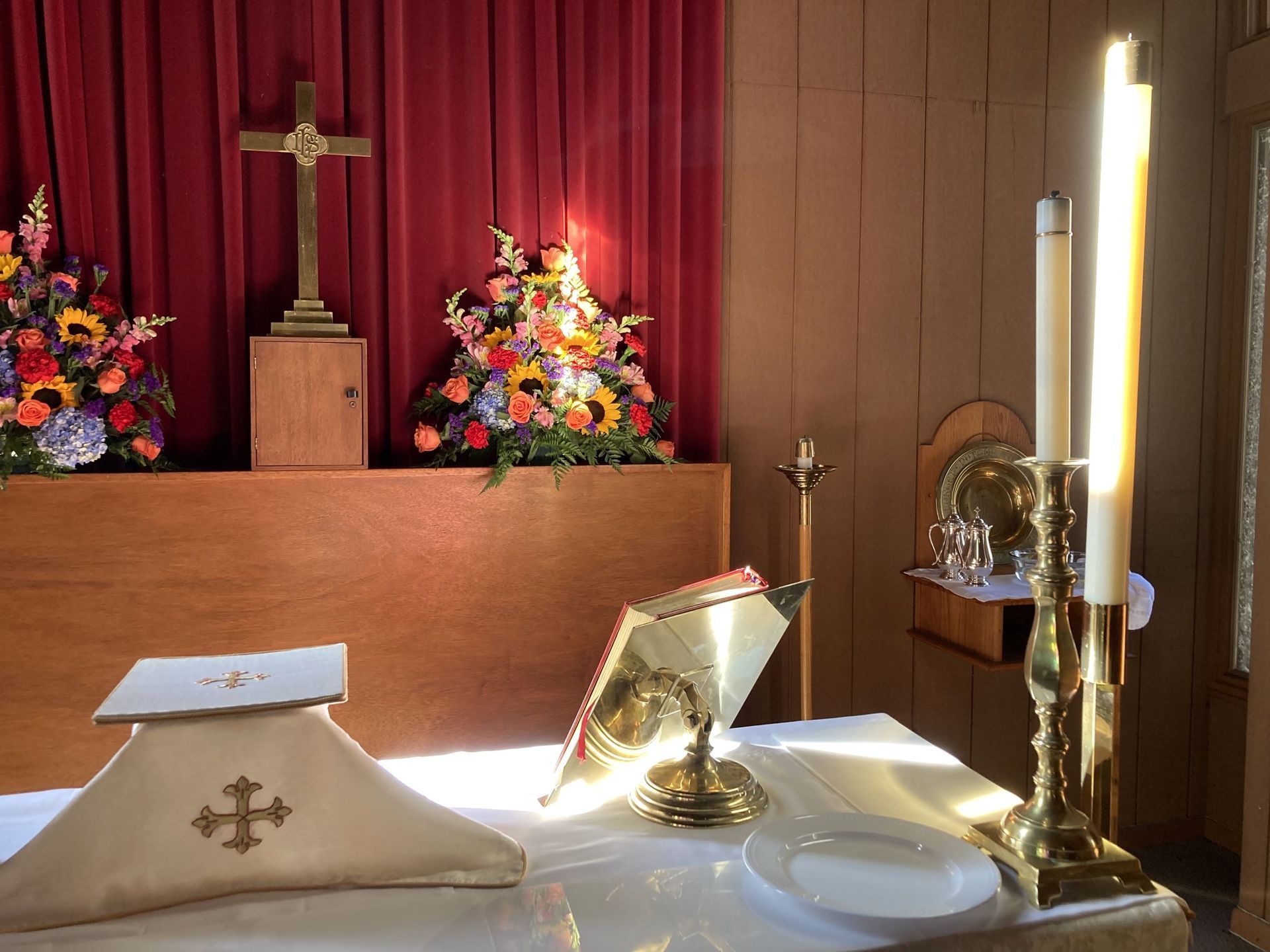
This Sunday, all are welcome to join us for a morning of worship and fellowship. Whether you are with us in the sanctuary or joining from afar, your presence strengthens our community. Our services are at 8:30 & 10:00 a.m. We warmly welcome those who cannot attend in person to join us via our live stream for the 10:00 a.m. service.

A couple of weeks ago we had a conversation about wisdom, what it is, where it comes from, whether we consider ourselves wise, and so on. I was thinking about this when I ran across an article about a book country music legend Willie Nelson wrote nearly 2o years ago. Nelson, now 91, wrote The Tao of Willie: A Guide to the Happiness in Your Heart, when he was a young man of 72. As you can guess from the title of book, Nelson's philosophy and outlook owe a lot to Eastern religious traditions. According to the article I ran across ( you can read it by clicking on this link ), Nelson, who was raised in Protestant churches in Abbott, Texas, began to suspect that the songs he was writing as a teenager, about experiences and heartbreaks that he was too young to know firsthand, might have been the consequence of past-life experiences. He came to the conclusion that he had led many past lives. “I haven’t run into anything I haven’t seen or heard before. I also feel as if I can put myself in the place of just about everyone I see, and that gives me the feeling I’ve been in their shoes before.” Beyond his belief in reincarnation, Nelson also came to think of the world's many religions as "a thousand paths to a single destination,” with the goal of bringing us closer to the divine. In short, Nelson has a lot of views that are consistent with some of what we've talked about in our PubTheo conversations over the last 11 years. So we're going to dive a little bit deeper into some of the nuggets of wisdom that Nelson shares in his book, and see what we have to say about them. The following is taken from Nelson's book and borrowed from the article mentioned above: The easiest mistake on earth is to forget to appreciate what you have right now. Happiness exists at just one time. And that time is now. You can be happy about how yesterday turned out, but you can’t be happy yesterday. You can only be happy today, this hour, this minute … now. Slow down. Not just your body but your mind. God is all around us, but it takes stillness to know his message. Breathing is its own form of meditation. Breathe from your chest; breathe from your gut; breathe from your heels. Breathing can calm you and put you in touch with your own spirit. It can deepen your contact with the world around you. If you concentrate and listen to your own breathing, what you will hear is the sound of God. As soon as you admit to yourself that everything good you do comes back to you twenty times over, then your life will change in incredible ways. Doing things because they’re the right thing to do—and not for some tangible gain—will ultimately reward you in better ways than money, power, or fame. Connections to those around you, to the world around us all, and to the universe that stretches into the great beyond are things that define us. The older I get, the more I realize it’s never too early to start appreciating the people in your life. If you love your family, it’s essential that you tell them. If you can make someone feel better with just a few words, why wouldn’t you use them? Love is what I live on. Love is what keeps me going. When in doubt, I try to remind myself that the path to God is paved with love. Join us at Casa Real in downtown Oxford on Tuesday, Oct. 15 at 7pm as we consider the wisdom of Willie Nelson. Our discussion will start there and then we'll see where else it wanders.
This Sunday, all are welcome to join us for a morning of worship and fellowship. Whether you are with us in the sanctuary or joining from afar, your presence strengthens our community. Our services are at 8:30 & 10:00 a.m. We warmly welcome those who cannot attend in person to join us via our live stream for the 10:00 a.m. service.
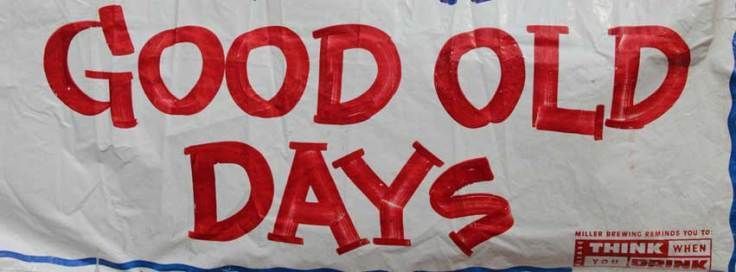
About 15 years or so ago I used to listen to a Detroit-based Gothic country band called Blanche. They had two great records back in the 2000s and then kinda faded away. You can still find their music various places online, but they haven't released an album since 2007, and as far as I know, they are defunct. It's a shame, because they had some really great songs. One line from one of their songs -- I couldn't tell you which anymore -- has really stuck with me though, and the sentiment behind it speaks directly to our discussion topic this week. The line goes something like this: "I dream in sepia." I hints at dreams and thoughts of days gone by, our memory of them faded and obscured but sweetly nostalgic. It's a dream of life as it used to be. In short, the good old days. But when exactly were those? And who exactly were those days good for? Why do we pine for some idealized vision of the past? Not surprisingly, scripture has something to contribute to this conversation. In Ecclesiastes 7:10 the writer (tradition attributes authorship to King Solomon) advises: "Do not say 'Why were the former days better than these?' For it is not from wisdom that you ask this." Why do we often hold this sentiment that the old days were better? Is it sometimes true? Why might the writer of Ecclesiastes suggest that this is not a wise question to ask? And what do you think of when you think of the good old days? That's the focus for our conversation this evening. Join us for the discussion starting at 7pm at Casa Real in downtown Oxford and tell us what you think.
This Sunday, all are welcome to join us for a morning of worship and fellowship. Whether you are with us in the sanctuary or joining from afar, your presence strengthens our community. Our services are at 8:30 & 10:00 a.m. We warmly welcome those who cannot attend in person to join us via our live stream for the 10:00 a.m. service.

